
How to Maximise Training Results Without Burning Out
The quiet reason your training has stalled…
You can be training consistently, eating well, showing up week after week — and still feel flat. Muscles feel heavy instead of responsive. Motivation dips. Small aches linger longer than they used to. Sleep doesn’t feel completely restorative.
For many people, this is not a discipline problem. It is a recovery problem.
Modern training does not happen in isolation. Your workouts sit on top of full workdays, cognitive load, emotional stress, interrupted sleep, and nervous system fatigue. When recovery does not keep pace with stress, performance suffers – regardless of whether you train Pilates, lift heavy, or do both.
The goal of this article is simple: explain why recovery is the missing multiplier for results, how to use it intelligently, and how consistency – not excess – produces the strongest, most sustainable outcomes.
TABLE OF CONTENTS
〰️
TABLE OF CONTENTS 〰️
Why You Feel Drained Even Though You Are Doing Everything Right
Most people assume fatigue comes from training volume alone. In reality, fatigue is cumulative.
→ Training stress
→ Work and decision fatigue
→ Emotional load and poor nervous system regulation
→ Residual inflammation from previous sessions
When these stack without adequate recovery, the body shifts into a protective state. Output drops. Coordination feels off. Motivation fades. Injuries appear more easily.
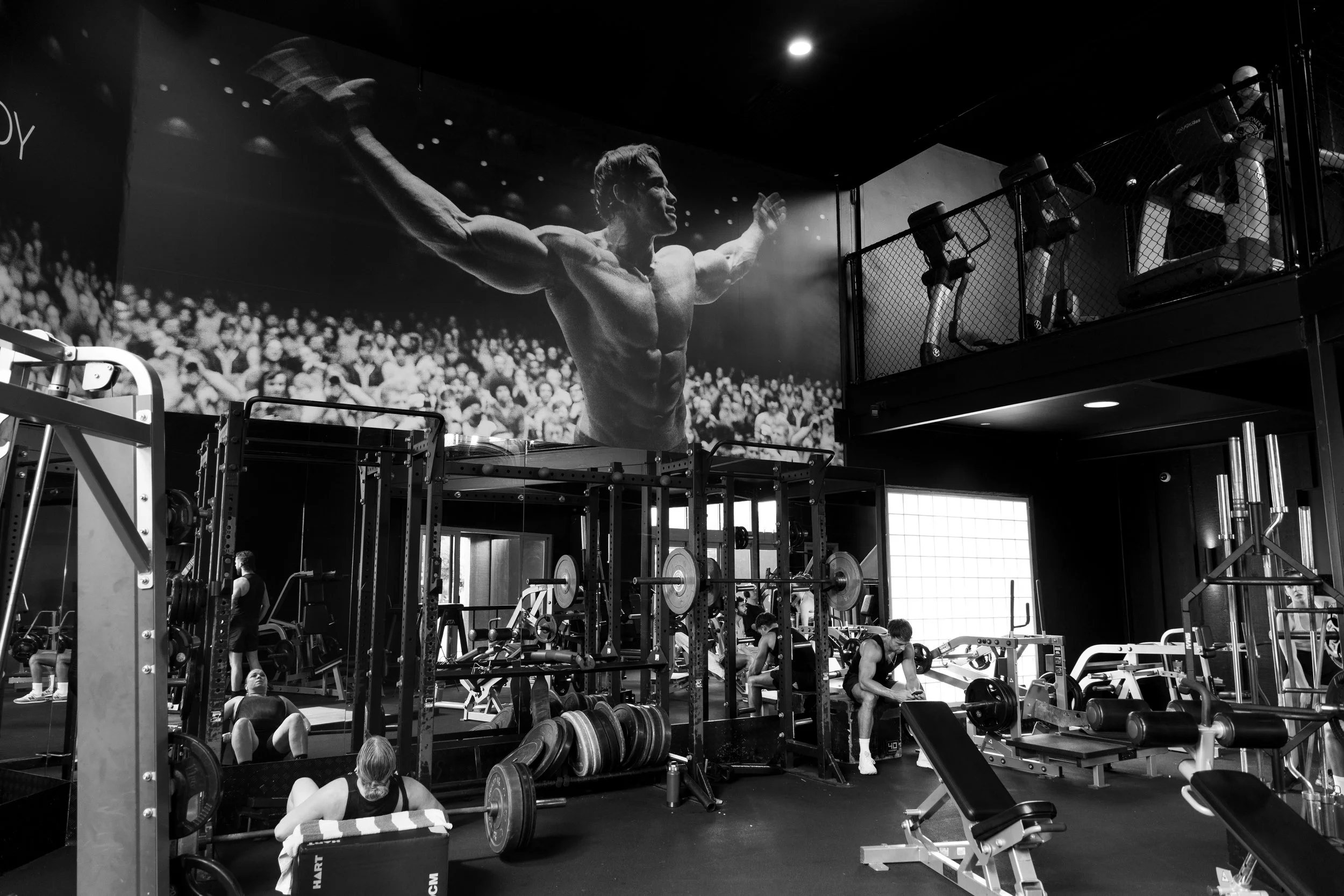
This is especially common for:
People rebuilding strength after a break, injury, or burnout
Pilates and yoga doers who expect low-impact training to feel restorative but still feel depleted
Lifters who train hard but feel progressively flatter rather than stronger
Recovery is not just about muscles. It is about restoring the nervous system, circulation, hormonal balance, and mental clarity – all of which determine how well training actually translates into results.
The Science of Adaptation: Results Happen When You Recover
Training is the stimulus. Recovery is the adaptation.
Strength gains, muscle repair, mobility improvements, and cardiovascular adaptation all occur after the workout – not during. This process is known as supercompensation: the body repairs itself slightly stronger than before, provided it has adequate resources and time.
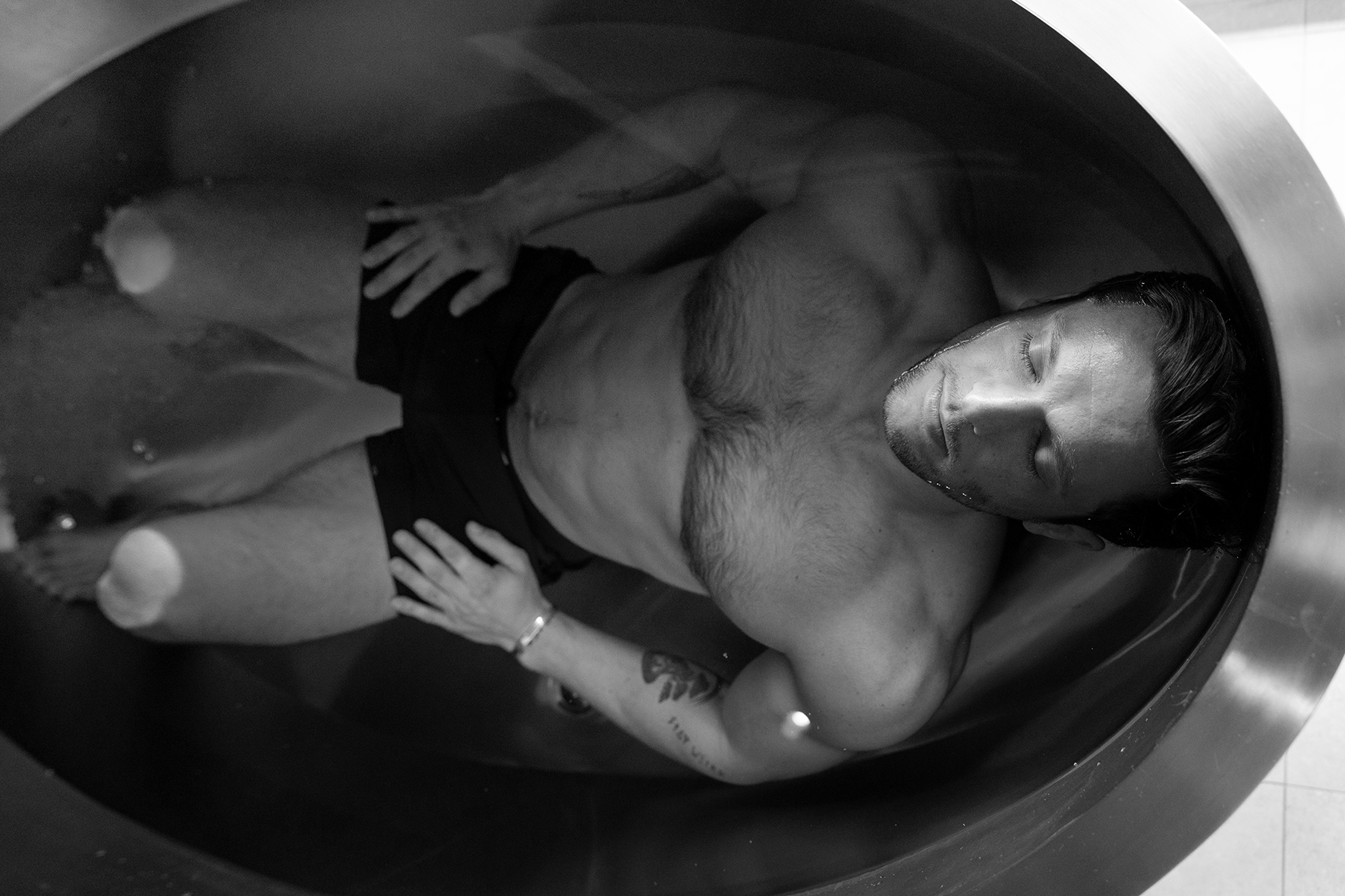
When recovery is insufficient:
Muscle protein synthesis is impaired
Inflammation remains elevated
The nervous system stays in a high-alert state
Performance plateaus or regresses
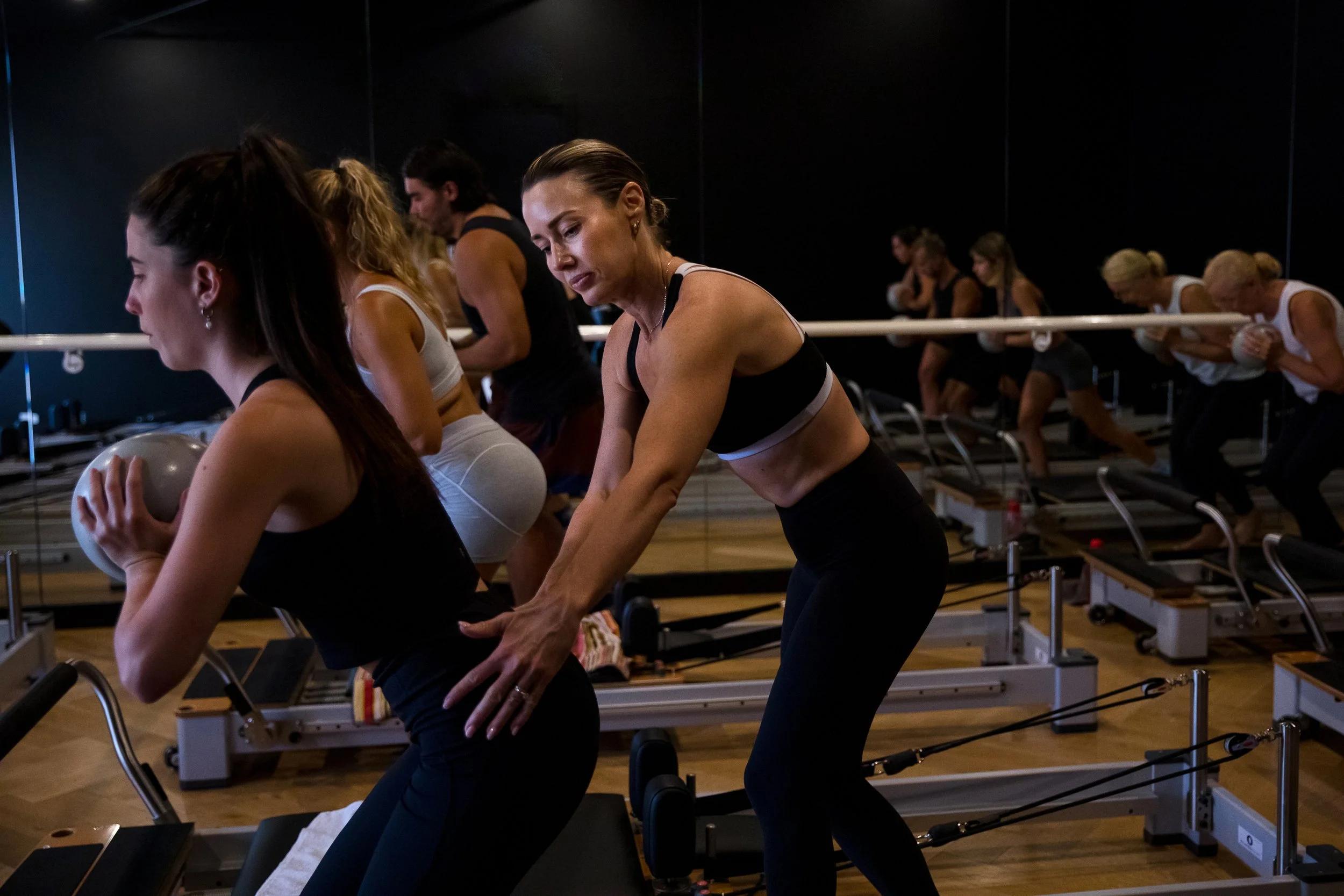
This applies equally to strength training and Pilates-style movement. Precision, control, and coordination depend heavily on nervous system freshness. When recovery is missing, movement feels forced rather than fluid.
The best results do not come from more sessions stacked on top of fatigue. They come from consistent training paired with consistent recovery.
Signs You Are Under-Recovering (Before Burnout Hits)
Under-recovery often appears subtly before it becomes obvious.
Physical signs:
Lingering soreness that does not resolve between sessions
Tightness that stretching does not relieve
Minor injuries or flare-ups that repeat
Mental and emotional signs:
Loss of motivation or enjoyment
Brain fog or difficulty focusing
Irritability or emotional flatness
Training-specific signs:
Strength sessions feel slower or weaker despite effort
Pilates or movement feels heavy instead of restorative
Increased need to push yourself to attend sessions
These signals are not failures of willpower. They are feedback. Ignoring them often leads to longer setbacks later.
What Real Recovery Actually Means (And What It Does Not)
Recovery is not inactivity. It is not avoiding movement. It is not waiting until something breaks.
Effective recovery supports:
Nervous system down-regulation
Improved blood flow and lymphatic drainage
Reduction of excessive inflammation
Restoration of mental clarity and emotional balance
→ Active recovery includes low-intensity movement, breathwork, and circulation-based modalities.
→ Passive recovery includes heat, cold, compression, and rest – used strategically.
The goal is not to eliminate stress (as some temporary stress is needed to increase your physical and mental capacities) — but to balance it.
The Evidence-Backed Recovery Modalities That Actually Work
Modern recovery tools work when used consistently and appropriately, not as occasional extremes.

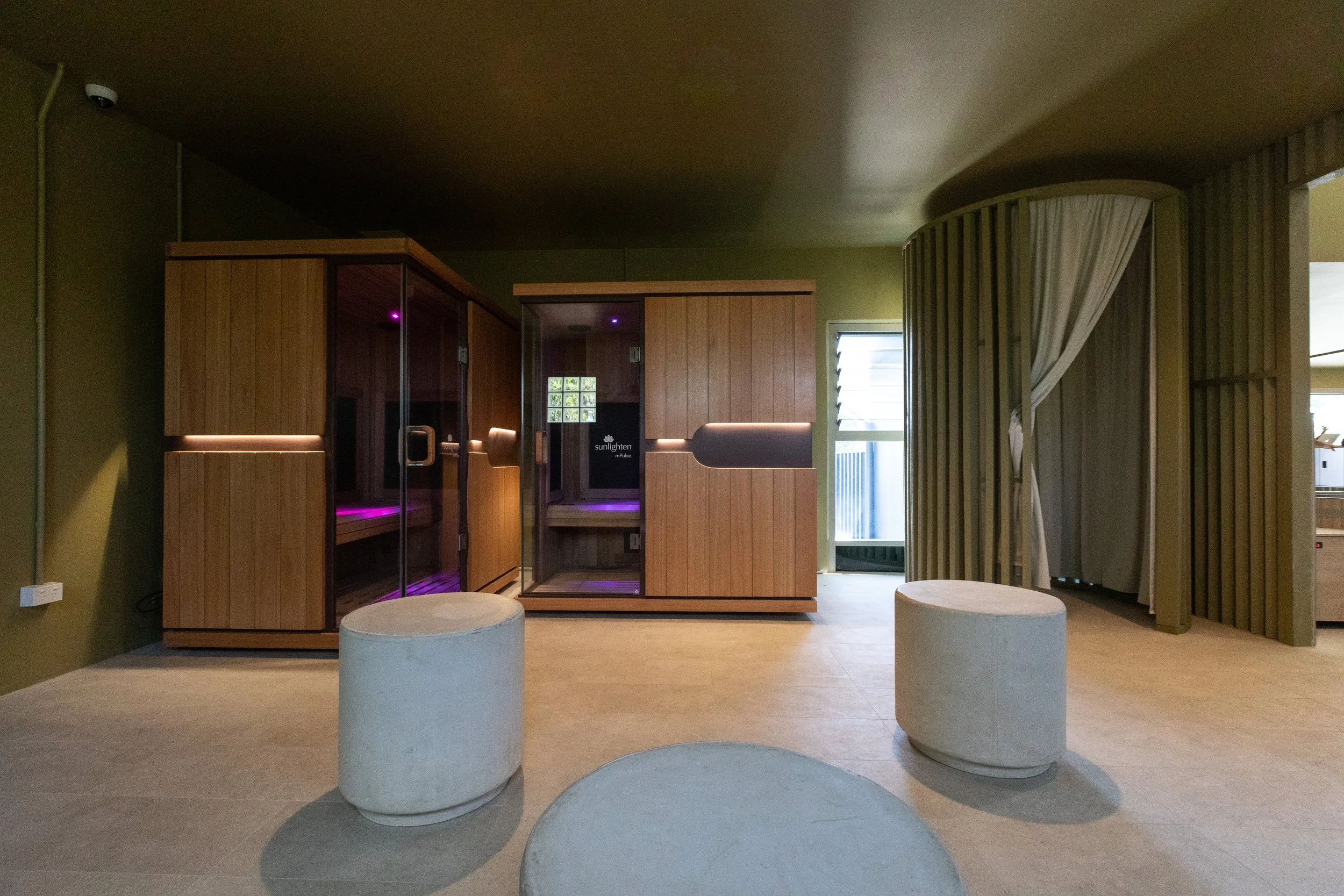
Heat therapy (Finnish sauna, infrared)
Heat exposure increases circulation, supports muscle relaxation, improves cardiovascular conditioning, and activates cellular repair mechanisms. Regular use is associated with improved recovery, reduced muscle soreness, and better stress regulation.
Steam and humid heat
Steam supports circulation, joint mobility, respiratory comfort, and nervous system relaxation. Many people find it particularly effective during periods of high stress or burnout.
Cold exposure (ice baths, cold immersion)
Cold reduces acute inflammation and soreness, particularly after intense training or high-volume phases. It is most effective when used strategically rather than after every session.
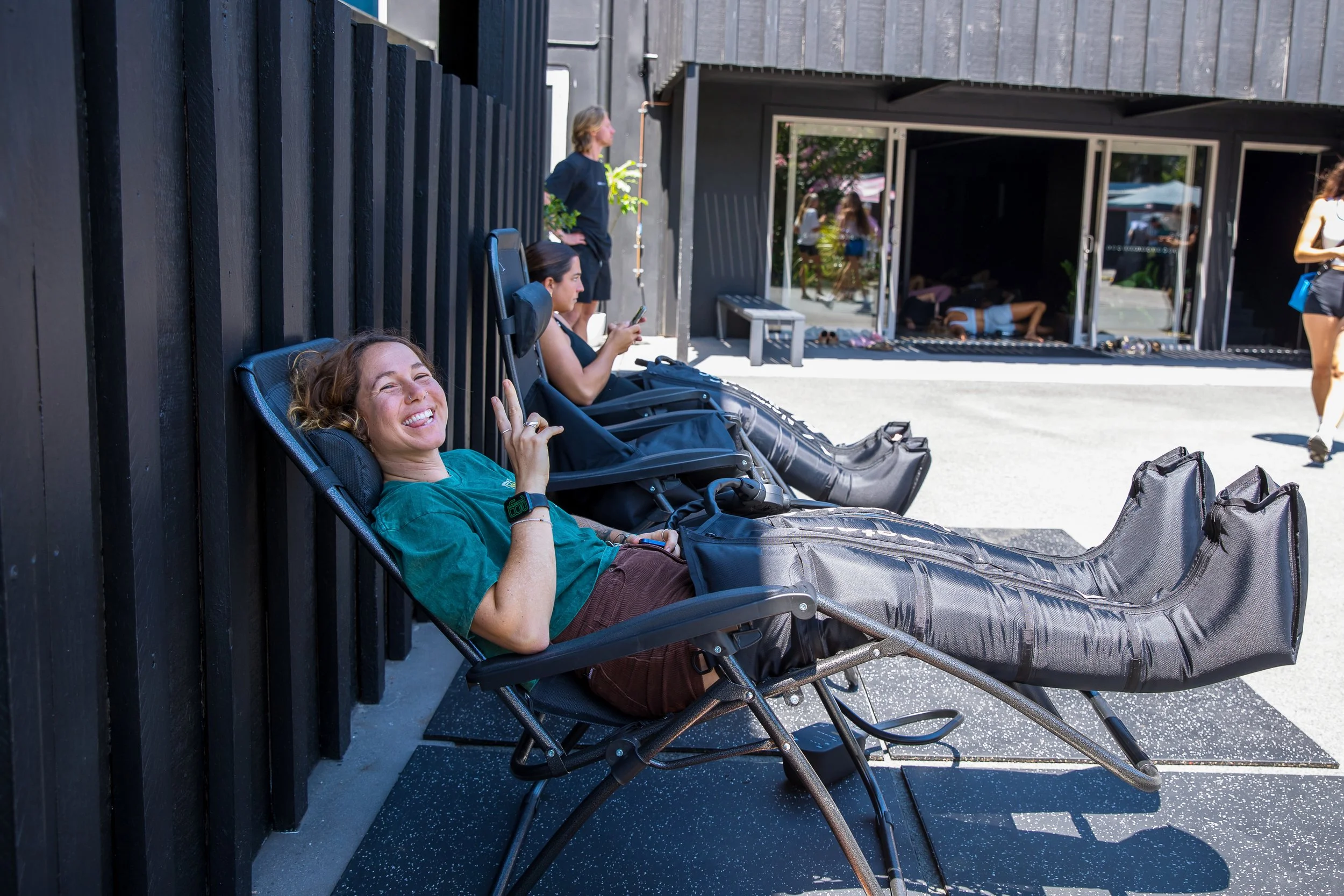
Compression and oxygen-based therapies
These modalities support venous return, lymphatic flow, and tissue oxygenation. The result is reduced heaviness in the limbs, faster recovery between sessions, and improved readiness to train again.
None of these replace training. They amplify it by allowing the body to return to a state where adaptation can occur.
Contrast Therapy: Why Hot and Cold Together Amplify Results
Contrast therapy — alternating heat and cold — works through vascular pumping.
Heat causes blood vessels to dilate. Cold causes them to constrict. Cycling between the two improves circulation, accelerates metabolic waste removal, and stimulates nervous system recalibration.
Benefits include:
Reduced muscle soreness
Faster recovery between sessions
Improved sleep and mental clarity
A strong reset effect after mentally demanding days
For strength athletes, contrast therapy supports recovery without blunting long-term adaptation when used intelligently. ForPilates and movement-based training, it enhances fluidity, reduces tension, and supports joint health.
This is why contrast therapy forms the foundation of Social Remedy’s Recovery focus – not as a ‘wellness trend’, but as a proven, accessible way to restore balance when training and life load are high.
1 - Heat Therapy: Finnish Sauna and Infrared Sauna
Heat therapy is one of the most evidence-supported recovery tools for improving training outcomes, nervous system regulation, and long-term consistency. Sauna exposure increases heart rate and circulation, delivering oxygen and nutrients to fatigued muscles while accelerating the removal of metabolic waste that contributes to soreness and stiffness.
At a cellular level, heat activates heat-shock proteins, which play a critical role in muscle repair, tissue resilience, and adaptation to stress. Heat exposure also shifts the nervous system toward a parasympathetic state, which supports better sleep, improved mood, and reduced mental fatigue — all essential for recovery outside the gym.
Finnish saunas provide higher ambient heat and a stronger cardiovascular stimulus, while infrared saunas operate at lower temperatures with deeper tissue penetration, making them more tolerable for sensitive systems or recovery-focused sessions.
-
Strength and bodybuilding athletes recovering from heavy or high-volume sessions
Pilates, yoga, and mobility clients managing chronic tension or stiffness
People experiencing burnout, overwhelm, or nervous system fatigue
Individuals returning to training after injury or time away
-
After training to support muscle relaxation and circulation
On rest or low-intensity days to promote nervous system recovery
During periods of high work stress or poor sleep quality
-
If dehydrated, light-headed, or unwell
During acute illness or fever
If you have uncontrolled cardiovascular conditions without medical clearance
2 - Cold Exposure: Ice Baths and Cold Water Immersion
Cold water immersion is most effective as a short-term recovery tool, particularly when soreness, inflammation, or training density is high. Cold exposure rapidly constricts blood vessels, reducing swelling and excessive inflammatory responses in worked tissues.
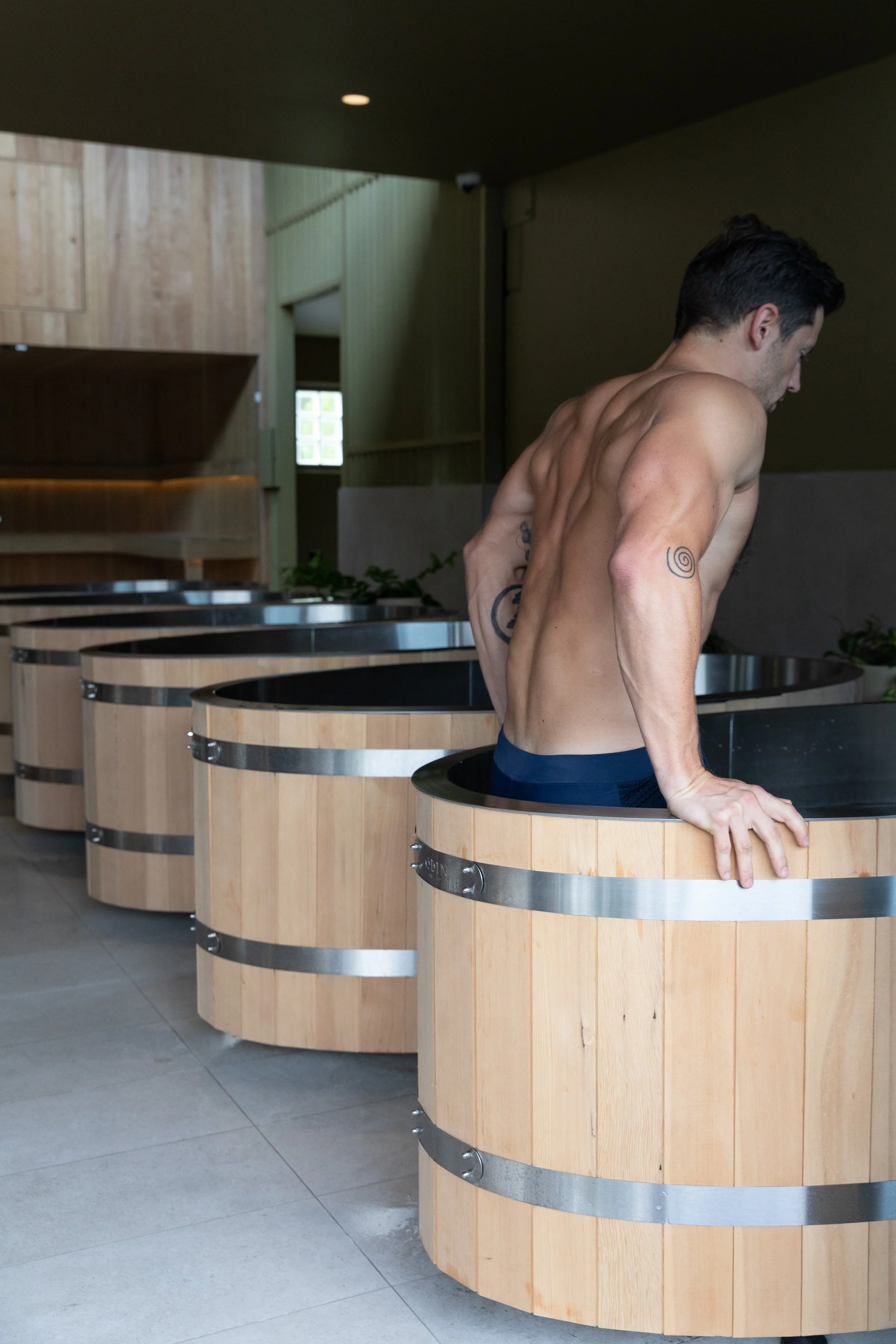
Cold also reduces pain perception by slowing nerve conduction, which is why ice baths are so effective for managing delayed-onset muscle soreness. When the body rewarms, blood vessels dilate again, improving circulation and nutrient delivery.
However, research shows that cold exposure immediately after strength training can blunt muscle adaptation. For this reason, we don’t recommend using cold therapy directly after a strength session.
-
Athletes training multiple times per week at high intensity
People experiencing significant muscle soreness or inflammation
Individuals in competition phases or physically demanding work cycles
Those needing a rapid recovery reset between sessions
-
After particularly demanding training sessions or competitions
During periods of high training frequency or cumulative fatigue
On days where recovery and readiness matter more than muscle growth
-
Immediately after every resistance training session if hypertrophy is the goal
If you have cardiovascular disease, Raynaud’s, or cold sensitivity
If breathing becomes uncontrolled or panicked during exposure
3 - Steam Therapy and Humid Heat
Steam therapy uses moist heat to create a gentler, deeply relaxing recovery stimulus. High humidity slows sweat evaporation, allowing warmth to penetrate muscles and connective tissue while promoting circulation and joint mobility.
Steam exposure encourages slower breathing and nervous system down-regulation, making it particularly effective for people experiencing stress, tension, or mental overload. It also provides acute blood pressure reductions through vasodilation and can feel less taxing than dry heat.
For many, steam is a recovery modality that restores fluidity and ease rather than stimulating intensity.
-
Pilates, yoga, and mobility-focused trainers
People managing joint stiffness, postural tension, or chronic tightness
Individuals feeling emotionally or mentally depleted
Anyone seeking gentle recovery rather than aggressive stimulus
-
After low- to moderate-intensity training sessions
On rest days as a nervous system reset
During periods of burnout or emotional fatigue
-
If you experience dizziness or breathing discomfort in humid heat
During acute respiratory illness
If hydration is inadequate or overheating occurs
4 - Compression and Oxygen-Based Recovery Therapies
Compression and oxygen-based therapies (like the Hyperbaric Chamber) support recovery by improving circulation, lymphatic drainage, and tissue oxygenation — all of which influence how quickly the body returns to a ready state.
Compression applies controlled external pressure to assist venous return and reduce fluid accumulation in worked muscles. Research shows it consistently reduces perceived soreness and modestly improves strength recovery, particularly in the lower body.
Oxygen-based therapies increase oxygen availability at the tissue level, supporting cellular repair, reducing fatigue, and improving recovery readiness — especially for those managing lingering injuries or cumulative stress.
-
Strength athletes with heavy lower-body training loads
People experiencing leg heaviness, swelling, or fatigue
Individuals returning from injury or managing chronic niggles
Those wanting recovery without additional heat or cold stress
-
After strength training or long periods on your feet
On rest days to promote circulation and recovery
During injury rehabilitation or reconditioning phases
-
If you have known circulatory disorders without guidance
If compression causes numbness or discomfort
If swelling or pain is unexplained and undiagnosed
The Power of Routine: Why Occasional Recovery Is Not Enough
Occasional recovery feels good. Regular recovery changes outcomes.
Just as sporadic training does not build strength, sporadic recovery does not resolve cumulative fatigue. The body responds to patterns.
Consistent recovery:
Lowers baseline inflammation
Improves training tolerance
Reduces injury risk
Supports emotional regulation and motivation
For many people, recovery becomes the stabilising anchor that keeps their routine intact during busy or stressful periods — especially when motivation alone is unreliable.
Building a Simple Weekly Training and Recovery Rhythm
Recovery does not need to be complicated. A sustainable framework might include:
3–5 training sessions per week
2–3 intentional recovery sessions
Same-day recovery after demanding workouts when possible
Recovery sessions do not need to be long. They need to be repeatable. When recovery is easy to access and part of the routine, consistency follows.
This matters most for people returning from injury, rebuilding structure after burnout, or seeking a calmer, more connected relationship with training.
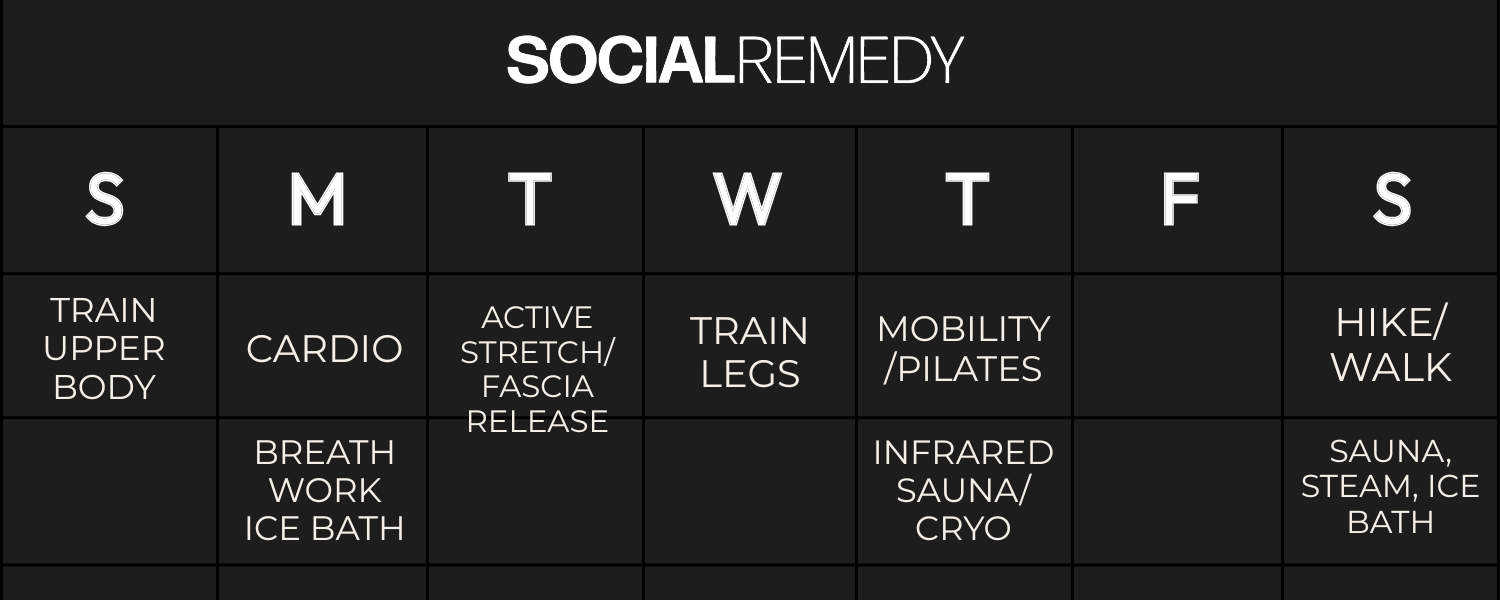
Sample weekly training + recovery circuit
Prompt for You to Map Your Recovery:
Without overthinking, map your ideal week:
Circle 3–5 days you realistically train
Highlight 2–3 days where recovery could happen naturally
Identify one session where recovery could happen immediately after training
Key reframe:
Recovery works best when it is attached to something you already do — not added as a separate task.
Recovery as a Non-Negotiable for Long-Term Health and Performance
People who train well into later decades share one trait: they recover deliberately.
Recovery supports:
Cardiovascular health
Nervous system resilience
Reduced chronic inflammation
Mental clarity and emotional stability
It is also deeply human. Recovery spaces become places of rest, enjoyment, and community – especially for those who feel disconnected or overwhelmed elsewhere in life.
Training builds capacity. Recovery protects it.
When recovery becomes part of your routine rather than an afterthought, training stops feeling like another demand and starts becoming what it should be: a sustainable investment in strength, balance, and long-term wellbeing.
